
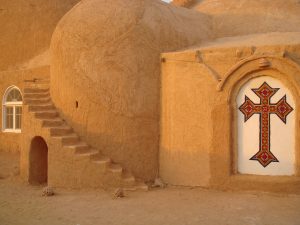
 On 19 May the Egyptian government issued an executive order legalising 191 more churches and affiliated service buildings, the 30th batch to be approved. It brings the total number of churches and buildings granted legal status to 3,804 since the committee created to oversee the legalisation of unlicenced church buildings began its work in 2017, following the passing of the Law for Building and Restoring Churches in 2016.
A total of 5,415 applications for legalisation have been made, comprising 3,730 submitted before September 2017 (the deadline stipulated by the 2016 law) and 1,685 submitted by a later extended deadline.
The order was issued following approval of applications at a meeting of the cabinet-affiliated Main Committee for the Legalisation of Churches, chaired by Prime Minister Mostafa Madbouly, on 16 April 2026. In attendance were Housing Minister Randa al-Minshawi, Representative Councils Affairs Minister Hany Azer, Justice Minister Mahmoud Helmy al-Sherif, and representatives of other relevant ministries and authorities including the Ministry of Local Development and the construction and licensing department of the Armed Forces.
The committee emphasised that legalisation is contingent upon compliance with national standards and Prime Minister Madbouly stressed the importance of buildings having proper fire safety systems and structural reinforcements to guarantee the safety of worshippers and the community.
Among the priorities discussed in the committee meeting was a review of buildings approved for legality during the previous meeting on 5 October 2025, especially regarding compliance with civil defence safety requirements. Legalisation becomes final only when approved churches comply with provisions of structural soundness and safety conditions, prove land ownership, and pay the required dues.
The same requirements do not apply to Sunni mosques, but other religious groups such as Ahmadi and Shia Muslims and Baha’is are in a worse position than Christians as they cannot apply for and obtain approval under the 2016 law.
Commenting on progress made in legalising the status of church and service buildings, Rev Khalaf Barakat, president of the General Evangelical Baptist Assembly in Egypt, said Christians welcome the ongoing efforts of the Egyptian state. He told Christian Daily International, “Baptist churches, like many others, have benefited from these measures, while some churches are still awaiting the completion of the legalisation process according to the schedules and mechanisms approved by the state. We appreciate the spirit of cooperation shown by the relevant authorities in dealing with this matter over the past years.”
Background
Before the passing of the Law for Building and Restoring Churches in September 2016 it was almost impossible for churches to obtain permission from the Egyptian government to construct new church buildings or repair existing ones. The law was introduced to make it quicker and easier to obtain permission and also to make provision for legalising Egypt’s approximately 5,000 unlicenced church buildings (including around 3,000 Coptic Orthodox churches).
Many churches, including Coptic Orthodox, Catholic and Evangelical, had been in great need of new or repaired premises because of growing congregations and declining conditions of existing church buildings. They had no option but to meet for worship in unlicenced premises and were sometimes attacked by Muslim mobs that suspected them of using homes for church services.
Following the passing of the law there were also attacks on Christians in some areas where the authorities’ site visits to assess applications were met with protests by extremist Muslims intent on ridding their villages of churches.
While Christians have welcomed the law as providing a procedure for achieving legalisation, there has been criticism of the committee’s slow pace. In January 2018 the Ministry of Housing announced that Christians would be allowed to meet in unlicenced premises while registration applications are processed.
There has also been an issue for some churches in underprivileged rural areas or in crowded urban areas with very narrow streets where complying with standard safety conditions has not been attainable in many cases. Coptic news source Watani reports, “Church officials complained about this to the Cabinet committee, which then decided to involve the Ministry of Housing in resolving the issue by figuring out adequate safety requirements according to relevant building codes. Until this is resolved, churches have been required to fulfil the minimum precautionary measures, such as providing fire extinguishing facilities.”
Read more about the situation facing Egyptian Christians in Church in Chains’ Egypt Country Profile.
(Christian Daily International, Christian Solidarity Worldwide, Egypt Independent, Watani)
Image: Christian Solidarity Worldwide