
 The Evangelical Fellowship of India’s Religious Liberty Commission (EFIRLC) has released its 2025 annual report which documents 747 incidents of hostility, intimidation, violence and discrimination against Christians across India throughout the year. The figure is considerably up on the number of incidents documented in 2024 (640) and over five times the number documented in 2014 (147), reflecting the continuing upsurge in persecution since the landslide victory of Narendra Modi’s Hindu nationalist Bharatiya Janata Party in 2014.
Titled “Hate and targeted violence against Christians in India”, the report lists incidents affecting individuals and congregations including disruption of church services, threats and harassment, physical violence, damage to property and arrests following allegations of religious conversion.
Rev Vijayesh Lal, General Secretary of the EFI, notes that “The documented incidents reveal recurring patterns in the manner in which such hostility unfolds. In many cases, prayer meetings or worship services were interrupted following complaints alleging unlawful religious conversion. Pastors and congregants were sometimes detained or questioned by authorities after such complaints were filed. In other instances, mobs assembled outside places of worship, issuing threats or demanding that gatherings be stopped.”
He adds that “responses from local administrative and law enforcement authorities were frequently reported as delayed, inconsistent, or procedurally inadequate”.
The figures presented in the report represent only verified incidents documented by the EFIRLC and do not encompass the full scale of violations. As the Methodology section explains, “Many incidents remain unreported due to fear of retaliation, social pressure, or lack of access to legal remedies. The documented cases should therefore be understood as indicative of broader patterns affecting religious freedom rather than a complete record of all incidents.”
Type of incidents
Threats and harassment were the most common form of hostility (204 recorded incidents), with legal pressure also a significant mechanism: the report lists 86 arrests and 98 cases involving false accusations or legal complaints, “reflecting the repeated use of criminal allegations, particularly those linked to claims of unlawful religious conversion” (which falls under “Freedom of Religion” legislation, commonly referred to as anti-conversion laws).
Physical violence was recorded in 112 incidents, while 110 cases involved the disruption of church services or prayer meetings. Other forms of hostility included 42 incidents of social opposition or boycott, 27 organised hate campaigns and eight cases categorised as gender-based violence. The report documents 25 incidents of vandalism and seven church burnings, plus one murder.
Geographic distribution
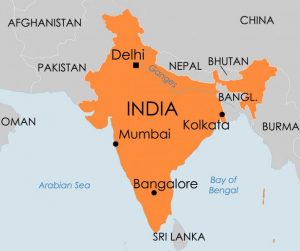
Uttar Pradesh, which has by far the largest population of India’s states, had the highest number of documented incidents with 217 cases, followed by Chhattisgarh with 177. The next highest numbers were documented in Rajasthan (51 cases), Madhya Pradesh (47), Haryana (38), Karnataka (31), Jharkhand (30), Bihar (25), Punjab (20), Maharashtra (20) and Odisha (19), with smaller numbers across several other states.
Many of the incidents in Uttar Pradesh involved allegations of unlawful religious conversion that led to police disrupting church gatherings and detaining or questioning pastors and congregants. Local groups often filed complaints under the Uttar Pradesh Unlawful Religious Conversion Prohibition Act.
In many cases harassment and threats against Christians were followed by mobs assembling outside prayer meetings, raising slogans and pressurising authorities to intervene. Subsequent disruptions, intimidation and physical violence were documented in a number of districts.
In Chhattisgarh, incidents were largely concentrated in tribal and rural districts and several cases involved large gatherings of villagers issuing threats, disrupting prayer meetings and beating Christians with sticks or rods. In one case a Christian woman who was six weeks pregnant suffered a miscarriage after being beaten with a stick and kicked repeatedly in the stomach.
Chhattisgarh also recorded incidents of vandalism, church burning and social pressure, and in several villages Christians were threatened with expulsion or social boycott if they continued to practise their faith.
Impact of anti-conversion laws
The report notes that anti-conversion laws had a significant impact on incident patterns across several states, and states: “A substantial number of cases involved arrests or legal complaints linked to allegations of unlawful religious conversion. In multiple instances, prayer meetings held in private homes were disrupted following complaints alleging inducement or coercion. Police intervention frequently resulted in detention or questioning before evidence was established.
“In some cases, conversion-related provisions were invoked pre-emptively, placing the burden of explanation on pastors or believers conducting routine worship gatherings. These dynamics have contributed to a chilling effect in certain areas, where ordinary religious activities are vulnerable to criminal complaints or administrative intervention.”
Recommendations
 Following an account of every incident documented throughout the year, the report ends with a set of recommendations “in the interest of strengthening constitutional commitments and ensuring that all communities are able to practise their faith without fear”.
The Commission calls on the government to publicly reaffirm the constitutional guarantee of freedom of religion and issue clear guidance to state governments and law enforcement agencies to ensure protection for peaceful religious gatherings and expression.
It asks that the government strengthen legal protections by enacting legislation to address targeted and communal violence; by reviewing the implementation and impact of anti-conversion laws and examining whether amendments are necessary to prevent their misuse; and by amending the constitution to extend Scheduled Caste protection to Dalits who profess Christianity or Islam (and who are currently disqualified from the government’s affirmative action scheme).
The Commission calls on the authorities to ensure accountability and the rule of law by enforcing criminal law against those involved in mob violence, vandalism of places of worship, intimidation and other acts of targeted hostility; by taking action against organised groups that promote sectarian hatred, mobilise mobs or file false allegations of forced conversion; by holding accountable police who fail to perform their duties or shield perpetrators; and by investigating and prosecuting cases involving the destruction of places of worship and ensuring that they are restored or rebuilt.
Among other recommendations, the Commission calls for law enforcement and administrative response to be strengthened (including training programmes for police officers and ensuring that complaints by victims of religion-based violence or discrimination are promptly recorded) and for protection and support for victims (including timely and adequate compensation, and rehabilitation and protection for victims displaced or threatened following violent incidents).
Read Church in Chains’ India Country Profile.
(Evangelical Fellowship of India Religious Liberty Commission)
Map: Church in Chains Global Guide