
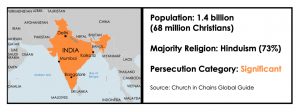
The Republic of India is the world’s largest democracy, comprising 28 states and eight Union Territories and is a land of diverse ethnicity, religion, language and geography. Over 430 languages are spoken, with Hindi and English the main official languages. The capital is New Delhi and the most populous city is Mumbai. While the vast majority of Indians are Hindu, its Muslim population of 14% (around 172 million people) makes India the country with the third largest Muslim population in the world.
Despite its nuclear power, space industry and booming IT sector, India also has hundreds of millions of rural poor and urban slum-dwellers and suffers from inadequate infrastructure and widespread corruption.
Christians in India
Christianity is believed to have reached India in the first century and has an honoured legacy of charity, schools and hospitals. India’s constitution guarantees religious freedom and Christians enjoy freedom in much of the country, but in rural areas they face increasing persecution from Hindu extremists motivated by Hindutva (Hindu nationalist ideology), while the introduction of “anti-conversion laws” in several states has led to increased violence against Christians including church burning, property destruction and beatings. The laws are intended to prevent Hindus converting to other religions but extremists misuse them by attacking Christians on false accusations of forced or fraudulent conversion. Attackers generally act with impunity and are rarely arrested.
There has been an upsurge in persecution of non-Hindus since the 2014 landslide victory of Narendra Modi’s Hindu nationalist Bharatiya Janata Party (BJP). Prime Minister Modi and the BJP were returned to office in 2019, causing concern among religious minorities, and while the BJP failed to win a majority in the 2024 general election, the party is leading a coalition with Narendra Modi serving his third term as prime minister.
In 2025 the Evangelical Fellowship of India’s Religious Liberty Commission documented 747 incidents of hostility, intimidation, violence and discrimination against Christians across India, a considerable increase on the number of incidents in 2024 (640) and over five times the 147 cases documented in 2014. Each violent incident often results in widespread suffering (one church attack, for instance, affects multiple individuals) and incidents are underreported due to fear of reprisals and lack of confidence in the justice system.
Dalits
Hindus who convert to Christianity face persecution, especially those from low castes. The ancient Hindu caste system is still a major factor in Indian society, especially in rural communities where there is far less social mobility than in cities. Discrimination based on caste is constitutionally illegal but persists throughout much of India.
The caste system assigns each person a place in the social hierarchy from the privileged Brahmins at the top to the downtrodden Dalits at the bottom. There has been huge growth in Christianity amongst Dalits and tribal Indians and nearly 80% of Indian Christians are from Dalit or tribal backgrounds.
Only Hindu, Buddhist and Sikh Dalits qualify for the government’s affirmative action benefit system, which was designed to redress the socio-economic exclusion of the “scheduled castes” and makes them eligible for benefits including free education, reserved jobs in the government and seats in state legislature. Converts to Christianity or Islam are deemed to have left the caste system and are excluded from benefits.
In October 2022 the Indian government announced that it had formed a commission to review the issue of excluding Dalits who convert to religions other than Buddhism and Sikhism, but on 24 March 2026 the Supreme Court ruled that scheduled caste status should remain unavailable to anyone who professes a religion other than Hinduism, Sikhism or Buddhism. The ruling stated that any Dalit who had converted away from one of the approved religions but decided to return to their originating religion could reclaim scheduled caste status.
Church in Chains in Action
In March 2025, Church in Chains wrote to the Indian Ambassador to Ireland seeking a meeting to discuss the ongoing attacks, harassment and threats on Christians and calling for the Indian government and law enforcement agencies to take decisive action in ensuring justice for victims of religious violence including:
- Ensuring police protection for Christian communities at risk of attacks.
- Holding extremist groups accountable for instigating and perpetrating violence.
- Preventing the misuse of anti-conversion laws against innocent individuals.
- Improving legal safeguards for victims of religious persecution.
- Ensuring fair and unbiased legal proceedings in cases involving religious minorities.
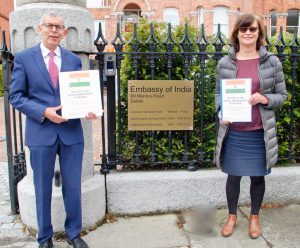 In July 2020, Pamela Coulter (Advocacy Officer) and David Turner (Director) were invited to present the Indian Ambassador to Ireland, Mr Sandeep Kumar with the petition signed by seventeen TDs and Senators expressing concern about the growth of attacks on Christians by Hindu militants.
(Sources: All India Christian Council, Asia News, Barnabas, Christian Solidarity International, Compass Direct News, Evangelical Fellowship of India, Library of Congress – State Anti-conversion Laws in India, Morning Star News, Open Doors, Operation World, Persecution Relief, Release, The Hindu, United Christian Forum, Voice of the Martyrs Canada, Wikipedia, World Watch List, World Watch Monitor)
INDIA: Hindu mobs target Christians in West Bengal state

A house church was vandalised and a pastor was abducted in separate attacks on the same day in West Bengal state
INDIA: Seven pastors released on bail
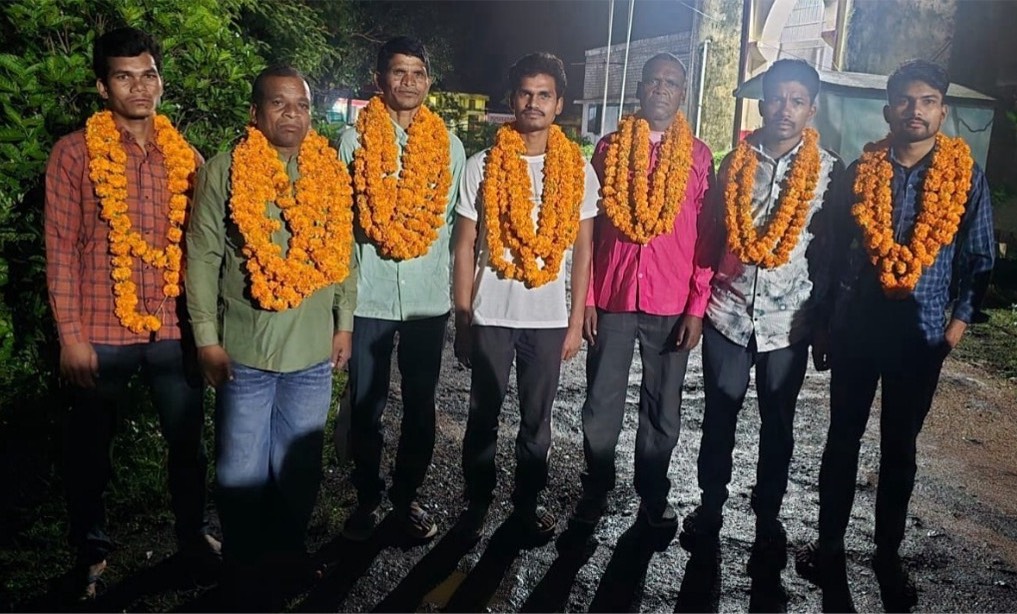
Seven pastors imprisoned in June under Madhya Pradesh’s anti-conversion laws have been released on bail
INDIA: Seven pastors imprisoned under anti-conversion laws
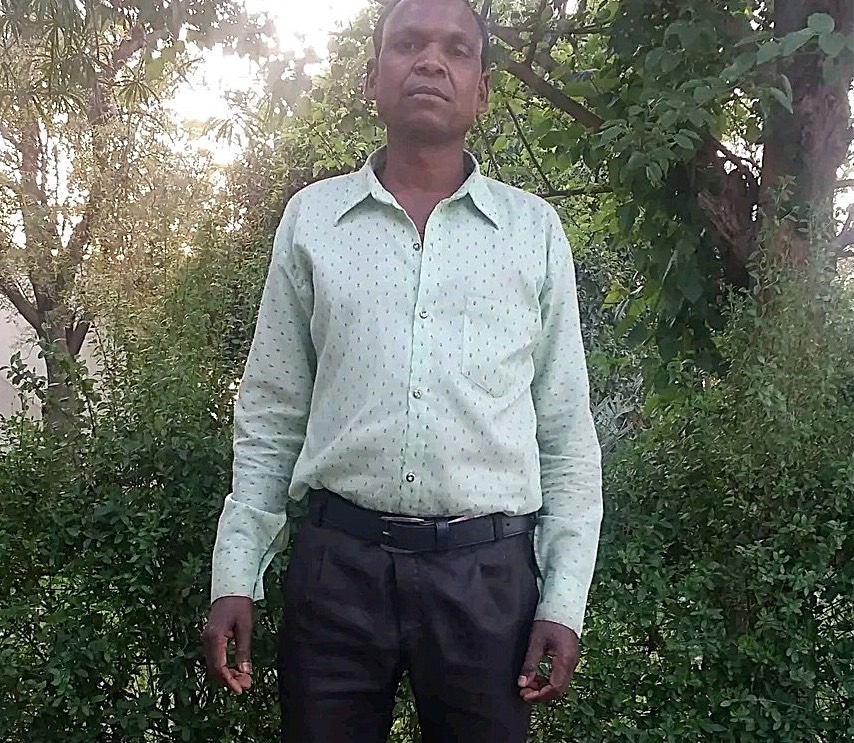
Chhot Singh Dhurve (pictured) is one of seven Christians recently imprisoned under Madhya Pradesh’s anti-conversion laws
INDIA: Pastor faces false charge; church and home set on fire
A pastor who was threatened by a neighbour on several occasions and falsely accused of assault in May had his church and home set on fire in June
INDIA: Sukma attack victims return from hospital to find homes looted

Victims of the Sukma church attack returned to their village after being discharged from hospital to find their homes looted